

By Cassandra Bausch
For most golfers, the shaft is still the least understood piece of equipment in the bag.
They’ll debate driver heads for hours. They’ll chase putters like they’re searching for religion. But ask them what’s actually happening inside the 46 inches connecting their hands to the clubhead, and the answers are usually vague: “stiff,” “low launch,” maybe “the one Rory uses.”
Jason Horodezky has spent the better part of three decades trying to fix that.
Not with better marketing. With better physics.
As CEO and CTO of KINETIXX Golf, Horodezky is one of the rare people in golf who can comfortably discuss torque values, resin systems, electrochemistry, and center-face smash factor in the same breath and somehow make it all sound like common sense. He is equal parts inventor, materials scientist, and golf obsessive, with more than a dozen utility patents and more than 50 patent numbers globally tied to his work. But if you ask him where that wiring came from, he’ll tell you it started long before golf.
His family tree reads less like a standard business bio and more like a blueprint for a lifelong inventor.
His mother was a Canadian art glass designer whose work ended up in the palaces of Sheikh Mohammed bin Rashid Al Maktoum during Dubai’s massive buildout. His father was Canada’s largest independent concert promoter, shaping the country’s music and sports exhibition landscape for decades through Brimstone Productions. Both were entrepreneurs, artists, and what Horodezky calls “outcasts” from families filled with PhDs, engineers, doctors, and scientists.
Innovation, in other words, was the family business.
One grandfather, Jacob Horodezky, was a Russian PhD chemist who escaped military service, immigrated to Canada, and built patented aqueous cleaning chemistries, some of which still exist today under the Johnson & Johnson label. Another, Harry Dubo, was a mechanical engineer who developed automated waste collection systems and servo-controlled scenting technologies still used in large commercial spaces today.
So yes, golf shafts were probably inevitable.
“In the early ’90s, I originally planned to pursue golf professionally,” Horodezky says. “But I was more drawn to physics, structural mechanics, and electrochemistry. I loved sports and wanted to combine my technical skills with performance-oriented sports equipment.”
In 1994, he founded iGolf Tech Technologies as an R&D, manufacturing, and fulfillment arm for the golf and sports equipment industry. It quickly became the place where ideas stopped being ideas.
“At that time and even today, there’s always a lot of interest in the category, but few with the intellectual and infrastructural capabilities to put ideas into practice,” he says.
That ability made him the quiet architect behind some of golf’s most recognizable product stories.
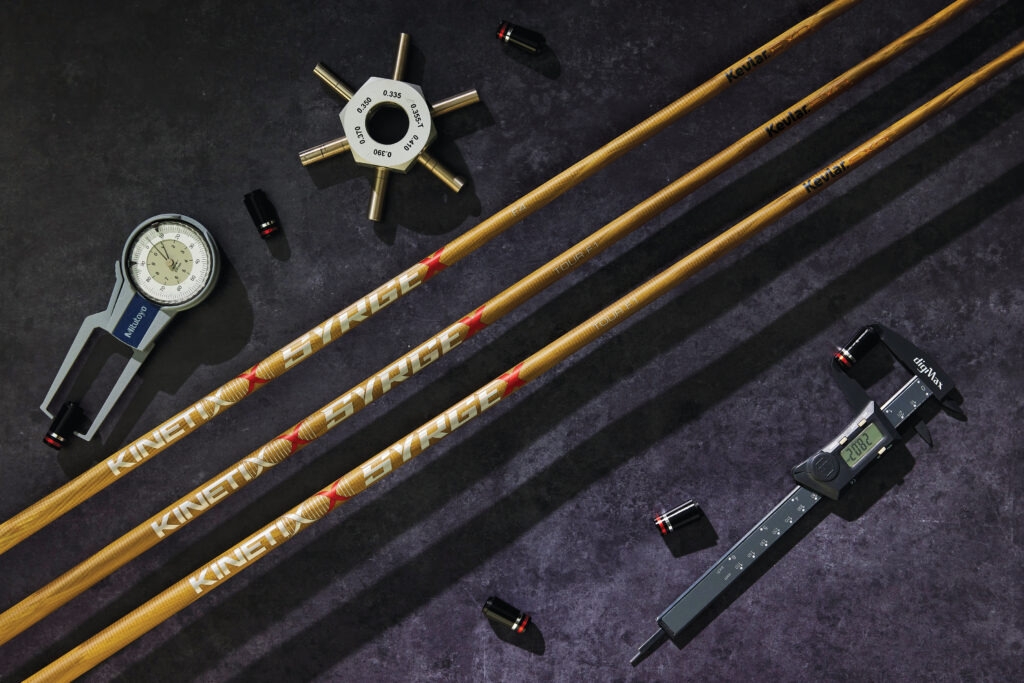
Long before golfers knew the KINETIXX name, they were already playing his ideas. His engineering fingerprints touched legacy innovations like Adams Tight Lies and Orlimar TriMetal, along with decades of OEM development for some of the biggest brands in the game.
For years, Horodezky operated in what he likes to call golf’s “behind-the-curtain” world; the place where technology gets built long before a logo gets stamped on it.
“We weren’t new to golf,” he says. “We were just new to the consumer.”
That distinction matters.
Because KINETIXX didn’t begin as a marketing exercise. It began as a manufacturing problem.
Horodezky’s background is less country club and more laboratory. With formal grounding in electrochemistry, physics, mechanical engineering, and impact mechanics, he approaches golf equipment the way a scientist approaches failure: by asking why.
Why do some shafts feel stable but dead?
Why do others feel explosive but inconsistent?
Why does the industry keep accepting compromise as unavoidable?
Most golf shafts are still built around tradeoffs. Increase torsional stability, and you often sacrifice feel. Add stiffness, and you can lose efficient energy transfer. Improve forgiveness, and dispersion can suffer elsewhere.
Horodezky never liked that answer.
“Every product is an engineered system,” he says. “Optimizing performance depends on manufacturing processes. Design language has negligible ROI. The structure method and material matrix from which a design is produced is most influential on performance return.”
Translation: paint and decals don’t fix bad engineering.
That philosophy is also why he has never been particularly interested in being another golf company built on clever marketing.
“I want KINETIXX to be in the same discussion as icons like Karsten at PING, Gary Adams at TaylorMade, Ely Callaway,” he says. “Innovators delivering generational technology. Clear and simple. Pure transparency.”
He also didn’t love how shafts were being built.
Traditional table-rolled shafts, still the industry standard, can introduce inconsistencies through resin pooling, voids, washout, and centerless grinding. If the structure isn’t consistent, the performance can’t be either.
For an engineer obsessed with repeatability, that was unacceptable.
So he challenged the process.
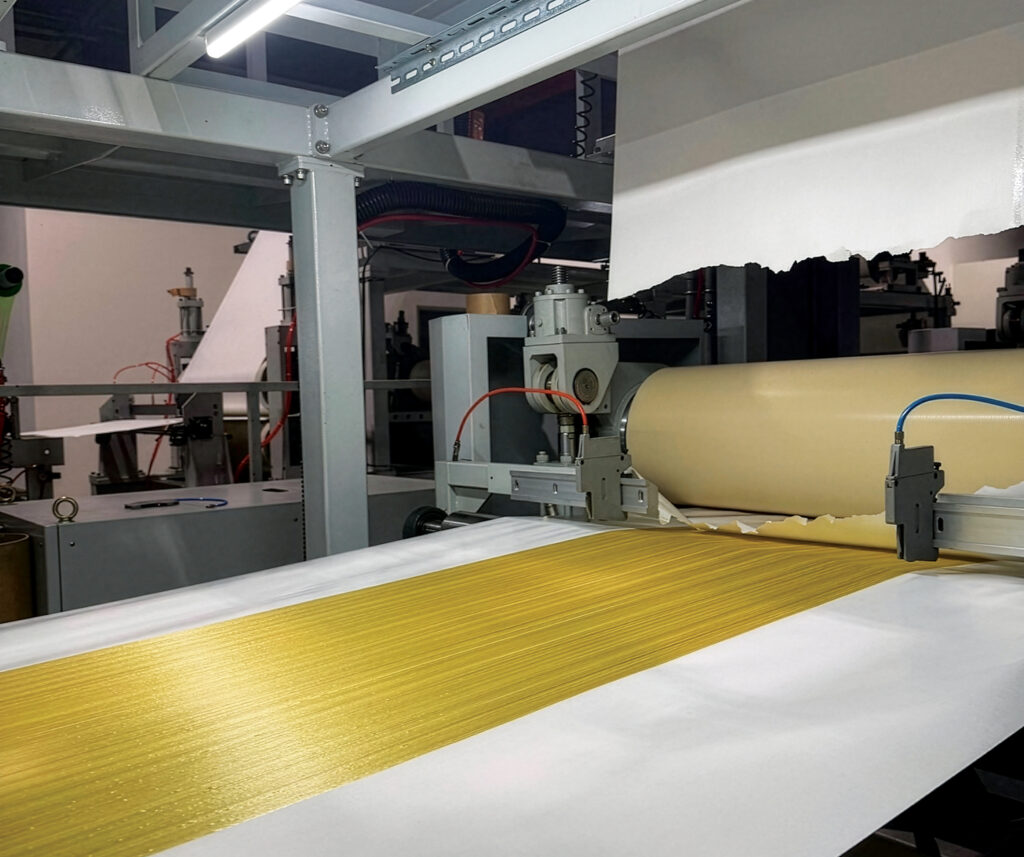
KINETIXX became known for hybrid construction methods combining vacuum curing, filament winding, and precision table rolling — utility-patented approaches designed to eliminate structural flaws before they ever reached a golfer’s hands.
“Our genius lies in hybridized manufacturing methods,” he says. “By making differently, we can access more materials and develop structures and patterned geometries for more targeted downrange performance difference.”
That molecular-level thinking is exactly where the next chapter began.
Kevlar is not new to golf. But Kevlar® EXOTM is.
Developed by DuPont, Kevlar EXO represents what Horodezky calls “the most significant commercially viable advancement in composites in the last 15-plus years.”
He knew it the moment he saw the technical data sheets.
“We recognized the potential immediately,” he says.
Kevlar EXO is a next-generation copolyamide aramid fiber with improved molecular alignment compared to standard Kevlar. In practical terms, it delivers an unusual combination of extreme lightness, flexibility, elongation, and strength. It stretches more than high-modulus carbon fiber without breaking, absorbs energy more efficiently, and offers exceptional thermal and fatigue resistance.
That may sound like a chemistry lecture, but in golf terms, it means something much simpler: stronger, faster, more stable energy transfer.
Most manufacturers source materials and try to design around them. Horodezky took the opposite route.
KINETIXX secured exclusive access to Kevlar EXO for golf shafts and built the proprietary unidirectional prepreg architecture around it themselves. They didn’t just buy the fiber; they designed, manufactured, and commercialized the material system.
That vertical integration is the real story.
“End-to-end control of the developmental and raw materials supply chain is crucial today,” he says. “This is the primary reason we take control, end-to-end where and whenever possible.”
In a category where most companies are choosing from someone else’s menu, Horodezky decided to own the kitchen.
That led to SyrgeX and FlexurX.
These are not positioned as “new shafts” so much as proof of concept for an entirely new materials platform.
It took more than two years, eleven prototype iterations, robot testing, and 300 dozen Titleist RCT balls to get there.
“This was a two-plus-year journey of tireless dedication, bandwidth, and expense,” he says.
SyrgeX is the headline-grabber: low-mid launch, aggressive energy transfer, and what KINETIXX calls “bulletproof precision.” It uses a high-modulus core paired with a filament-wound Kevlar EXO exoskeleton to reduce ovaling, suppress vibration, and dramatically improve torsional stability.
In simpler terms: it goes hard without getting wild.
It’s built for mid-to-high swing speed players who want a stable kick point, low torque, and the feeling that every ounce of energy is moving directly into the ball, not disappearing into shaft deformation.
FlexurX attacks the same problem from a different angle.
Built for golfers who need a little more help — more forgiveness, more efficiency, and more consistency on off-center strikes — it delivers mid-high launch with controllable spin and what Horodezky calls “the most advanced table-rolled shaft ever developed.”
Same science. Different player.
Both are built around the same holy grail: eliminating the long-standing tradeoff between bending stiffness and torsional stability.
That sounds technical because it is.
But the golfer experience is easy to understand.
Better contact. Tighter dispersion. More efficient energy transfer. Less wasted swing.
And maybe most importantly, a shaft that doesn’t ask the player to choose between distance and control.
The idea of eliminating compromise is the thread running through Horodezky’s entire career.
He talks about shafts less like products and more like systems.
“The shaft isn’t there to launch the ball,” he says, essentially. It’s there to preserve and deliver kinetic energy as efficiently as possible.
Every layer matters. Every angle matters. Every fiber orientation matters.
Good design is invisible. The golfer just feels the result.
That same thinking extends far beyond golf.
KINETIXX has already developed a 12-to-15 variation catalogue of Kevlar EXO unidirectional prepreg products for qualified manufacturers across industries. The same hybrid construction methods used in SyrgeX and FlexurX can apply to hockey sticks, helmets, footwear, aerospace applications, motorsports, defense systems…anywhere lightweight strength and repeatable performance matter.
“This is not just about golf shafts,” Horodezky says. “Think hockey sticks, helmets, footwear. Any hollow-body structure.”
That’s the bigger vision.
SyrgeX and FlexurX are not the finish line. They are technical milestones.
“These signify the start of a new run,” he says.
For Horodezky, success isn’t simply launching another premium shaft into an already crowded marketplace. It’s sustained discussion that puts KINETIXX on the short list of true technology brands. It’s more shafts in play on Tour. It’s major wins. It’s continuing to be the winningest shaft brand in recent long drive history. It’s also seeing Kevlar EXO deployed in life-saving applications and maybe, just maybe, helping produce a sub-two-hour marathon shoe along the way.
When asked what he hopes his legacy will be, his answer sounds exactly like the career he’s already built:
“Advanced composite materials innovation…visible fiber technology in complex engineered structures that maximize potential energy, enhance efficiency, and deliver pure kinetic energy transfer.”
Jason Horodezky has spent a career building things other companies put their names on.
Now, with KINETIXX, the name on the shaft is finally his.
The technology, however, is only getting started.
Visit kinetixxgolf.com for more information and use code CAGOLF26 to get 20% off.

