

By Eric Woods
Photos by Glenn Alexakis
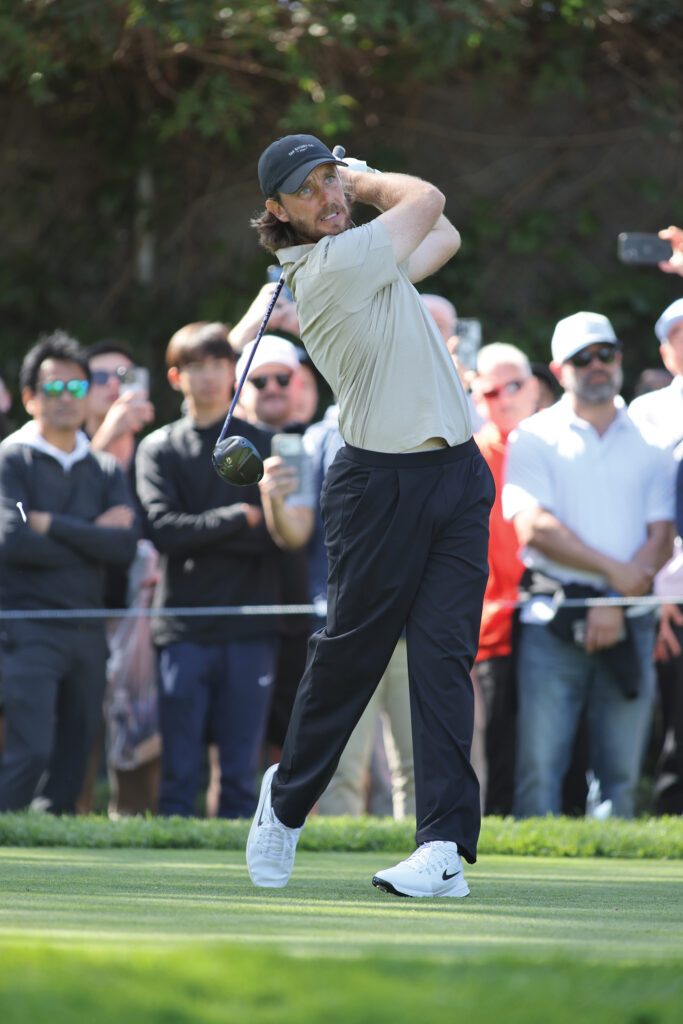
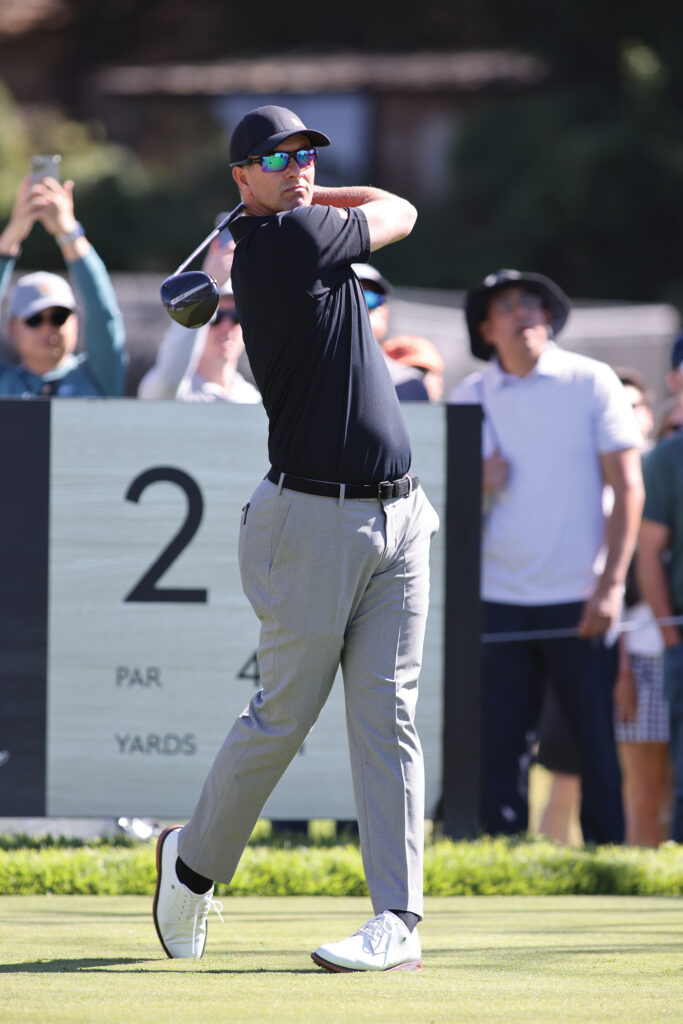
Watch Adam Scott, Rory McIlroy, and Tommy Fleetwood swing a driver, and at first glance, you’ll see three completely different motions. Scott’s classic, structured rhythm. McIlroy’s explosive athleticism. Fleetwood’s smooth, flowing tempo.
But freeze them at the finish and suddenly, they look nearly identical.
Each player is fully rotated toward the target. Their weight is entirely on the lead (left) side. The trail heel is off the ground, pointing skyward. The lead leg is braced and stable. The right shoulder is pointing toward their intended target.
Different swings. Same ending.
That’s not a coincidence, it’s a clue.
The Finish Is a Result, Not a Position
Many golfers make the mistake of trying to pose the finish. They lift the back foot, force a turn, or try to “hold” a tour-looking position after the ball is gone.
But elite players don’t manufacture that finish. They arrive there because of what they do through impact.
The real lesson isn’t how they finish; it’s why they finish that way.
What They All Have in Common
Despite their stylistic differences, Scott, McIlroy, and Fleetwood share a few critical movements through the ball:
• A stable lead foot that stays grounded and square throughout the swing
• A braced lead leg that straightens as they rotate through impact
• Full hip rotation toward the target, with the belt buckle facing forward
• Upper body rotation that brings the chest and right shoulder through
These aren’t cosmetic details. They’re the engine of the golf swing.
When those pieces work together, the body has no choice but to move into a balanced, fully rotated finish.

Let the Back Foot React
One of the most telling similarities is the trail heel—lifted, with no weight remaining on the back foot.
But here’s the key: none of these players are trying to lift it.
The heel comes up because all of their pressure has moved forward. Their rotation has pulled them onto their lead side. The back foot simply responds.
Trying to force that move by spinning out or jumping off the trail foot usually leads to poor contact and loss of balance.
Instead, think of it this way:
“Don’t lift your back foot, rotate until it has no choice.”
The Lead Side Is the Anchor
The lead side does the heavy lifting.
As these players move through the ball, the lead leg firms up and acts as a post. This allows the hips to open, the torso to unwind, and the club to release with speed and control.
Without that stability, rotation stalls. And when rotation stalls, everything else breaks down, timing, strike, and direction.
A simple, effective feel:
“Push into your lead leg
and turn around it.”
Balance Is the Final Check
The finish position is ultimately a test of balance.
If you can hold your finish with your weight fully on your lead side, trail foot light, and body facing the target, there’s a good chance you moved well through the shot.
If you’re falling backward, hanging on your trail foot, or struggling to stay upright, something earlier in the motion needs attention.
The Big Picture
Adam Scott. Rory McIlroy. Tommy Fleetwood.
Three distinct swings. One shared truth.
Great ball-strikers don’t chase positions—they create them through motion. Their identical finishes aren’t rehearsed poses; they’re the natural outcome of proper sequencing, pressure shift, and rotation.
So the next time you practice, don’t focus on copying the finish.
Focus on what gets you there.
Eric Woods
Golf Lab Academy Founder
2 Time Canadian Tour Leading Money Winner
Canadian Tour Low Stroke Average Winner
South American Leading Money Winner
Tour Member:
Asian Tour, Australian Tour, Canadian Tour, South African Tour, South American Tour

