
For those who spend a lifetime in the game of golf, there comes a moment when a quiet thought begins to surface: Will I ever shoot my age?
It’s one of the game’s most personal milestones, less about competition and more about time, persistence, and a lifelong relationship with the sport. Yet for most, the question of when, where, or how it might happen gradually fades into the background.
Until, suddenly, it doesn’t.
Two Lifetimes in Golf
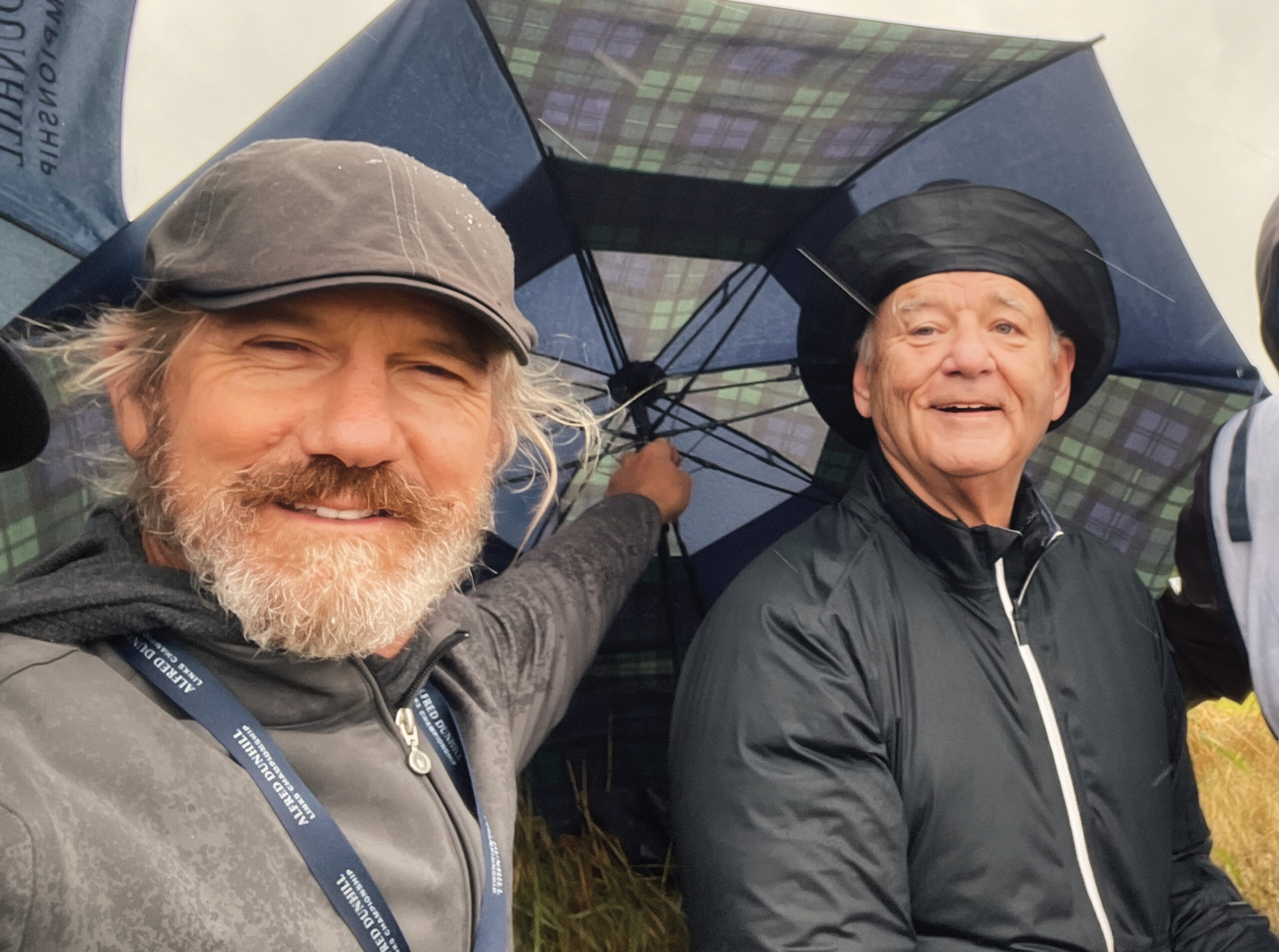
In the fall of 2025, that milestone arrived unexpectedly for two longtime friends: Bill Murray and John Ashworth.
Their paths into golf began in remarkably similar fashion. Both learned the game as young caddies: Bill in the suburbs of Chicago, John in Southern California. Over the years, each carried a single-digit handicap and developed a deep, enduring connection to the game, though their careers would take very different directions.
Bill Murray became one of the most recognizable entertainers of all time, often weaving golf into his work. From his unforgettable role as Carl Spackler in Caddyshack, to his decades of crowd-pleasing appearances at the AT&T Pebble Beach Pro-Am, to his iconic swing toward Mount Fuji in Lost in Translation, golf has always been part of his story.
John Ashworth’s journey stayed closer to the fabric of the game itself. A collegiate player at the University of Arizona in the late ’70s and early ’80s, he later caddied on the PGA Tour before building a legacy in golf apparel. Through brands like Ashworth, Fidra, Linksoul and now at Goat Hill Park, he has helped shape the style and culture of modern golf.
Their friendship was forged about a decade ago through a shared passion for the game and a cause that mattered deeply to John.
Saving Goat Hill
In 2014, Ashworth led the effort to “Save Goat Hill,” a struggling municipal course in Oceanside, California, that was on the brink of closure. Looking to rally support, he reached out to Murray.
What followed was a moment that gave the project national attention.
At the 40th anniversary of Saturday Night Live, Murray stepped onto the stage wearing a tuxedo with a “Save Goat Hill” t-shirt underneath. The image became a powerful symbol of support, injecting new life into the effort. Not long after, Murray became an investor and partner in the course.
From there, the two stayed connected, playing golf together in various places over the years, their friendship grounded in the game they both loved.
A Magical Week in Scotland
In early October 2025, Bill Murray found himself at St Andrews, competing in the Dunhill Links Championship. Paired with professional golfer Jordan Smith, Murray helped their team make the cut, no small feat in a Pro-Am field where only 15 teams advance to the final round.
He was playing well. Comfortable. In rhythm.
Then, on Sunday, October 5, just two weeks after turning 75, it happened.
On the Old Course, in competition, with a gallery looking on, Bill Murray shot 75.
His age.
It was the kind of moment golfers dream about but rarely experience: the game’s most historic stage, the weight of competition, and a number that aligned perfectly with the years behind him.
And, fittingly, the golf gods had a hand in it.
On the final hole, Murray hit a solid tee shot that drifted right, bounding through a wooden boundary and onto the adjacent road, where it struck the backside of a dog. The ball ricocheted back into play, settling safely in the fairway. He would go on to make par, sealing the round.
A bounce you couldn’t script.
A story you couldn’t invent.
Afterward, Murray called Ashworth, his voice filled with unmistakable joy.
“I thought I’d have to be in my eighties to get it done,” he admitted.
For a lifelong golfer, it was one of those rare, perfect days.
Bandon Dunes:
A Different Kind of Magic
Just over two weeks later, on October 21, the day after his 66th birthday, John Ashworth landed in North Bend, Oregon, for his annual buddies’ trip to Bandon Dunes.
Among his group, affectionately known as the “Uncle Tony,” were 24 friends from across the country gathering for five days of golf, camaraderie, and friendly competition at one of the game’s most revered destinations.
Arriving at Bandon carries a certain feeling, something like being a kid pulling into Disneyland for the first time. Anticipation, excitement, a sense that something special is about to happen.
Ashworth barely had time to take it all in.
His group had moved their tee time at Old Macdonald from 2:40 to 1:30 to ensure they could finish all 18 holes. That meant a scramble: luggage dropped at the lodge, shoes changed, clubs assembled, a quick shuttle ride—and no time for the range or practice green. Just a power bar, a pull cart, and straight to the first tee.
But none of that mattered.
The weather was perfect, 70 degrees, calm air, and the mood was even better. Smiles all around. Energy high.
Teams were drawn on the first tee:
• Ollie, a PGA teaching professional and scratch player, paired with Spoony, a 7-handicap business owner from San Diego
• Drew, an attorney from Chicago, teamed with “Uncle Ashy”—John Ashworth himself—both playing to 4 handicaps The stage, once again, was set.
A Round for the Ages
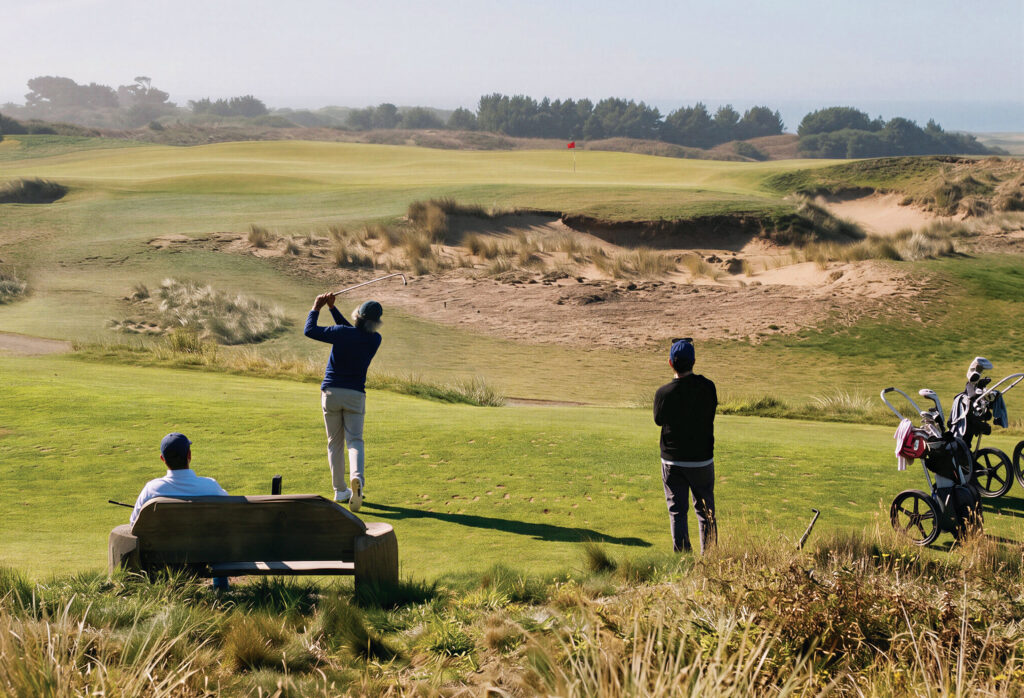
What follows is the round as remembered by their playing partner, Ollie—a hole-by-hole account that, in hindsight, reads less like a scorecard and more like something unfolding in real time.
It didn’t start with fireworks.
At the opening hole, a gentle par 4, Ashworth found the fairway, hit a solid approach to 20 feet, and calmly two-putted for par. A steady beginning. Nothing more.
The second, a demanding par 3, offered the first hint that this might not be an ordinary day. After a rare mishit off the tee, understandable given the whirlwind arrival just minutes earlier, Ashworth clipped a delicate 70-yard wedge, using the slope perfectly to set up an unlikely par. A small save, but a meaningful one.
From there, a rhythm began to build.
Pars came easily through the next few holes—controlled drives, composed approaches, nothing forced. Then, at the short par-3 fifth, the tone shifted. A 16-foot birdie putt dropped, almost unexpectedly, and a quiet confidence began to take hold.
At six, a reachable par 5, Ashworth threaded a remarkable lay-up between bunkers before floating a wedge to three feet. Another birdie.
Now two under.
And then, at the seventh, the round ignited.
From the fairway of the ocean-side par 4, Ashworth struck a 9-iron that, according to his playing partners, “never left the flag.” The ball landed just short of the hole and disappeared.
Eagle.
In the span of three holes: birdie, birdie, eagle.
Something had changed.
The Quiet Realization
By the turn, Ashworth had reached five under par. Only then did the realization begin to creep in—not for him, but for those around him.
The front nine at Old Macdonald plays to a par of 34.
Ashworth had shot 29.
The mood shifted instantly. Words became scarce. Glances were exchanged. A finger to the lips. No one wanted to disturb what was unfolding.
Golf has a way of punishing awareness.
So they said nothing.
Holding the Line
The back nine became a test not of brilliance, but of composure.
At ten, a cautious two-putt par.
At the par four eleventh, a pivotal moment. A drive out of position left, a decent recovery followed by a delicate wedge from 105 yards settled inside four feet. The putt dropped, a par saved and with it came the first outward release—high-fives, laughter, the kind of energy that can no longer be contained.
Five under.
At twelve, another dart with a flushed 7-iron, this time to eight feet on a demanding par 3. The putt never threatened to miss.
Six under.
Now the question lingered, unspoken but understood: How far could this go?
A Brief Wobble
Even in the best rounds, golf demands its moment of resistance.
At thirteen, a missed birdie opportunity from close range brought a rare sense of deflation. At fourteen, a slightly heavy tee shot hinted at tension creeping in.
But Ashworth responded the way seasoned players do—not with force, but with acceptance.
A steady par. Reset.
On fifteen, as the sun began to drop over the Pacific, he delivered one of the most remarkable shots of the day: a fairway metal from distance that finished perfectly hole-high on the green. An eagle putt narrowly missed but tap in birdie.
Seven under.
The Test
At sixteen, a slight block right miss off the tee led to a difficult lie and a blind approach over the iconic “Alps” mound. What followed was a towering 7-wood that carried trouble and took the sloop onto the green. Another chance. Another near miss.
The round held.
Then came seventeen.
A par 5. A scoring opportunity.
But golf, as always, demanded something in return.
A misjudged third shot found a bunker. A recovery left more work to do. For the first time all day, Ashworth faced adversity with the card in jeopardy he holed a gritty 10 foot putt.
Bogey.
His first of the day.
And yet, even that felt like a victory. The round remained intact.
The Finish
At eighteen, under fading light, Ashworth split the fairway one final time.
The approach was pure, landing softly and feeding toward the hole, settling 15 feet away. A final test.
Two putts.
Par.
Sixty-Five
Only then, as the round ended and the group gathered, did the number come into focus.
65.
Six under par.
One stroke better than his age.
Ashworth hadn’t been tracking it. Not consciously. While those around him whispered and calculated, he simply played—shot by shot, moment by moment.
When he realized what he had done, the reaction was immediate.
Celebration. Laughter. Disbelief. For his playing partners, it felt like witnessing something rare and fleeting, a round where everything aligns just enough, and time seems to step aside.
Elevate
Later that evening, after helping secure victory at the 2025 Uncle Tony Invitational alongside his partner Pat Foley, Ashworth sat among friends, the glow of the day still lingering.
The conversation drifted, as it often does, toward routines, habits, and the search for something deeper in the game.
Someone asked about his yoga and meditation practice.
Ashworth paused, then answered simply:
“I’m just trying to elevate.”
He lifted his hands slightly, flipped his thumbs upward, and smiled.
Around the table, the group exchanged puzzled looks, unsure exactly what he meant.
Ashworth shrugged, flashed that familiar, sheepish grin, and took a gulp of his beer.
No further explanation needed.
When It Finds You
Two friends.
Two rounds.
Two moments that arrived not through chasing, but through time, patience, and a lifetime in the game.
One on the Old Course at St Andrews.
One on the rugged coast of Oregon.
Both unexpected.
Both unforgettable.
Because in golf, as in life, the milestones you think about for years rarely arrive when you’re looking for them.
They find you when you least expect it.

