
“This legislation prevents exploitation of reservation systems and protects access for local residents who fund these public facilities,” said Assemblymember Chris Ward (D-San Diego) as he introduced the “Blocking Illegitimate Reservations and Protecting Equitable Access to California’s Publicly Owned Golf Courses Act.” Numbered AB 1954, the “Act” gives the state’s municipal golf courses a tool they don’t now have and only the state can provide to manage their parkland golf properties for the maximal benefit of the communities they are intended to serve.
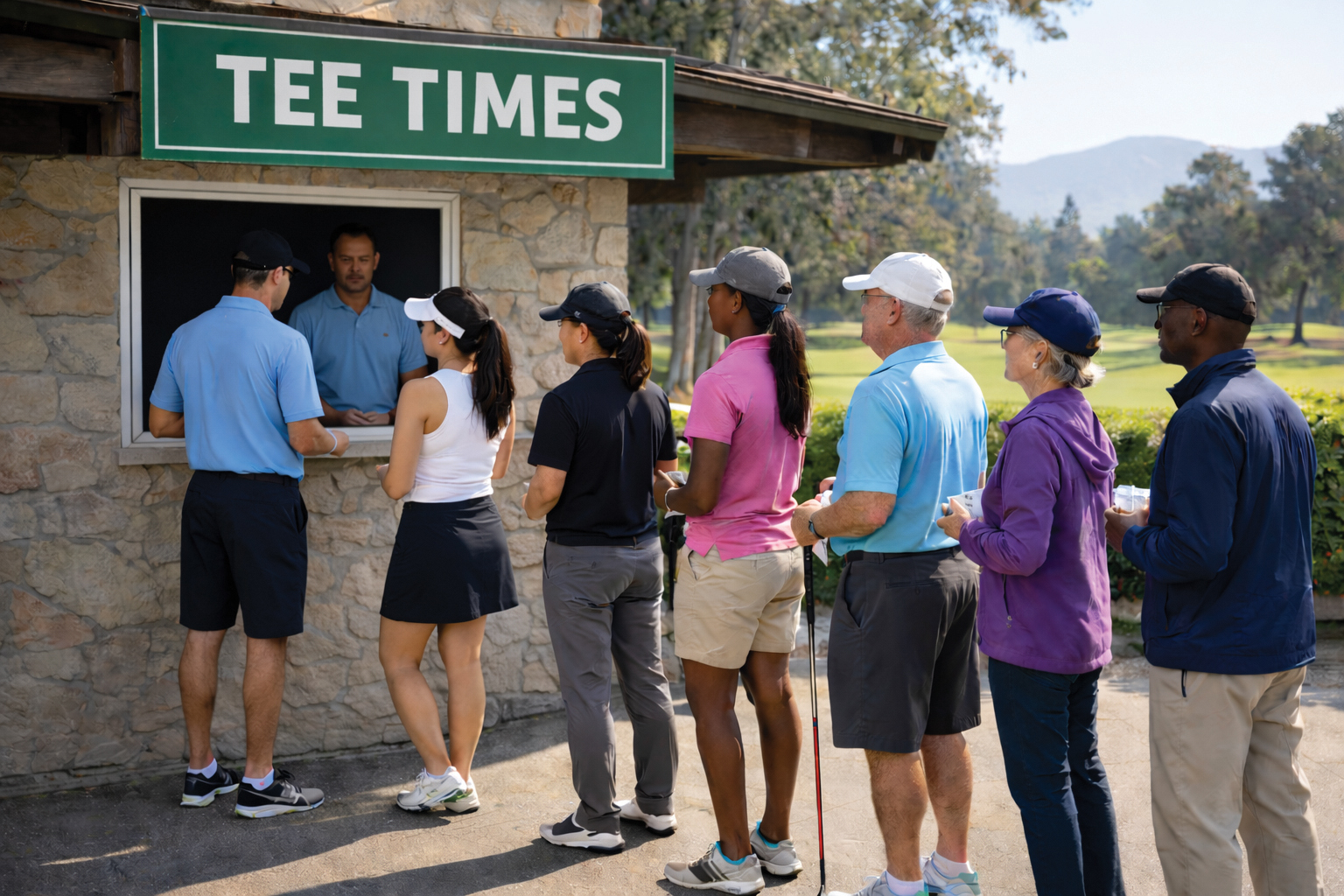
There are over 220 golf courses in California that are municipally owned by cities, counties, charter cities, and the state. As part of publicly owned park systems, these courses operate per business models that eschew maximal revenue generation in favor of making them universally available to local residents, seniors, juniors, school athletes, local clubs and civic organizations. Because California’s urban areas are among the most golf-starved in the nation, this model creates a demand for tee times second to none. It also creates opportunities for 3rd party tee time brokers to capture and re-sell tee times at inflated prices and in the process substantially reduce the already strained supply of recreational opportunities available to California residents.
When the prevalence of 3rd party brokering became a front page story in Los Angeles and other California urban areas in 2024, municipalities adopted various forms of reservation protocols at the expense of the public that mitigated the problem but in the end were not capable of solving it. That is where AB 1954 would come in.
To be 100% clear; It’s important to emphasize that this bill does NOT in any way affect agreements that are freely entered into for ostensible mutual benefit. It ONLY affects brokering without the consent of the public agency that owns the golf course or the management group that the public agency has put under contract to operate its golf course. There are many well-known and popular vendors in that space. They operate by written agreements that bring benefit to both municipality and vendor, not to mention golfers, and would NOT be affected by AB 1954.
“The preservation of affordable, accessible public golf is always at risk, but it is a California value – consistent with California’s ‘better angels’ of an open, opportunity-for-all society,” said California Alliance for Golf Executive Director Craig Kessler. “AB 1954 is not just fully consistent with those values; its passage would be a facilitator of them.”

