
By ED TRAVIS
The new year is well underway and as is usual, the more things change the more they stay the same and the sense of a poor soap-opera plot is sometimes overwhelming.
We now are being treated to further complications of the LIV saga. Not only is it clear the merger with the PGA Tour is never going to happen, but mega-star Bruce Koepka has walked away from his LIV contract to return to the PGA Tour.
The exodus from LIV includes 2018 Masters champion Patrick Reed and in case LIV’s self-serving pronouncements and gnashing of teeth has turned you off a few wannabe stars are also forsaking the multimillions of the Saudi PIF for the respectable but fewer millions of the PGA Tour. Now that Official World Golf Ranking points are available to LIV golfers, the future remains as clear as the mud in the bottom of the pond on the third hole of my local course.
LIV events no longer will be 54 holes but 72 just like the big boys. What hasn’t changed is they are still meaningless exhibitions with limited fields of what can only be described as average talent and everybody gets a check no matter how poorly they play. The fact that the top ten finishers are now awarded OWGR points changes nothing in terms of creating excitement, fan interest and television ratings.
An interesting sidebar is the PGA Tour seems to be preparing to name The Players Championship as the fifth major joining the Masters, PGA Championship, U.S. Open and British Open. Fans should be enthusiastic for a fifth major since it may help get rid of the Tour’s eight “Signature Events” which have limited 72-player fields and usually no-cut. If you think this sounds a lot like LIV you’re right.
Moving on to another soap opera, the USGA’s rollback of golf ball performance for elite players due to take effect Jan. 1, 2028, has been pushed back to Jan. 1, 2030, coinciding with when the rest of us non-elites will be forced to play the shorter distance ball.
What seems to have been overlooked by those who make our rules was how to define elite and non-elite so that the decision seemingly left to a pro shop clerk. Should it be by handicap or how far he or she hits the driver or some other undefined criteria?
The USGA proved that they didn’t apply real world thinking when considering the implications of setting two rollback dates.
Lost in the mist and not being talked about is that the PGA of America and PGA Tour have not changed their opinion a reduced distance ball is unnecessary and in fact bad for the game.
We haven’t heard the last of this.
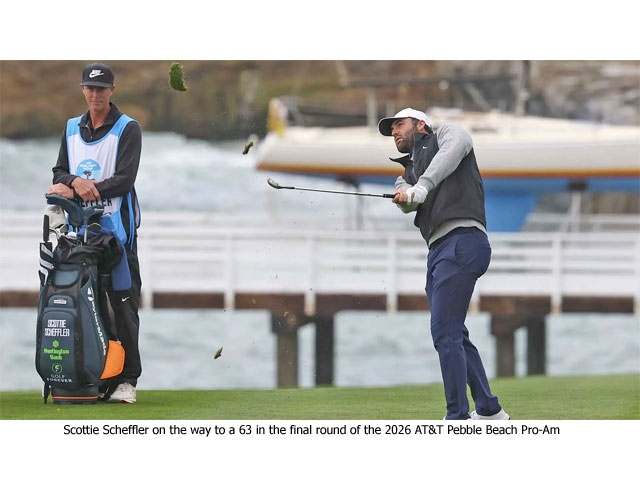
Thankfully that’s not the case on the PGA Tour where Scottie Scheffler is more than proving the superstar appellation. He has played in three 2026 events, won one and has a streak of 17 consecutive top ten finishes, the longest since Billy Casper in 1965.
If you are wondering how hard this is to do, the PGA Tour record of 65 top tens in a row was set by Byron Nelson in 1942-46 and since you probably are also asking yourself, Tiger Woods’ longest top ten streak was 8.
Scheffler is well established in the rarified atmosphere of media speculation. My fellow journalists babble weekly predicting how many majors and how many wins the Dallas resident will pile up reminiscent of Woods 25 years ago and Jordan Spieth in 2015.
This journalistic exercise certainly isn’t anything new and I’ll repeat the more things change the more they stay the same.

