
By Eric Woods
Photos by Gordon Seay
After a standout collegiate career at Stanford, Karl Vilips has wasted no time establishing himself at the professional level. Turning pro in 2024, he quickly earned his PGA Tour card through the Korn Ferry Tour, highlighted by a breakthrough victory at the Utah Championship and a series of strong finishes that secured his promotion. He carried that momentum into his rookie PGA Tour season, capturing his first Tour title at the Puerto Rico Open and cementing his status as one of the game’s rising young talents.
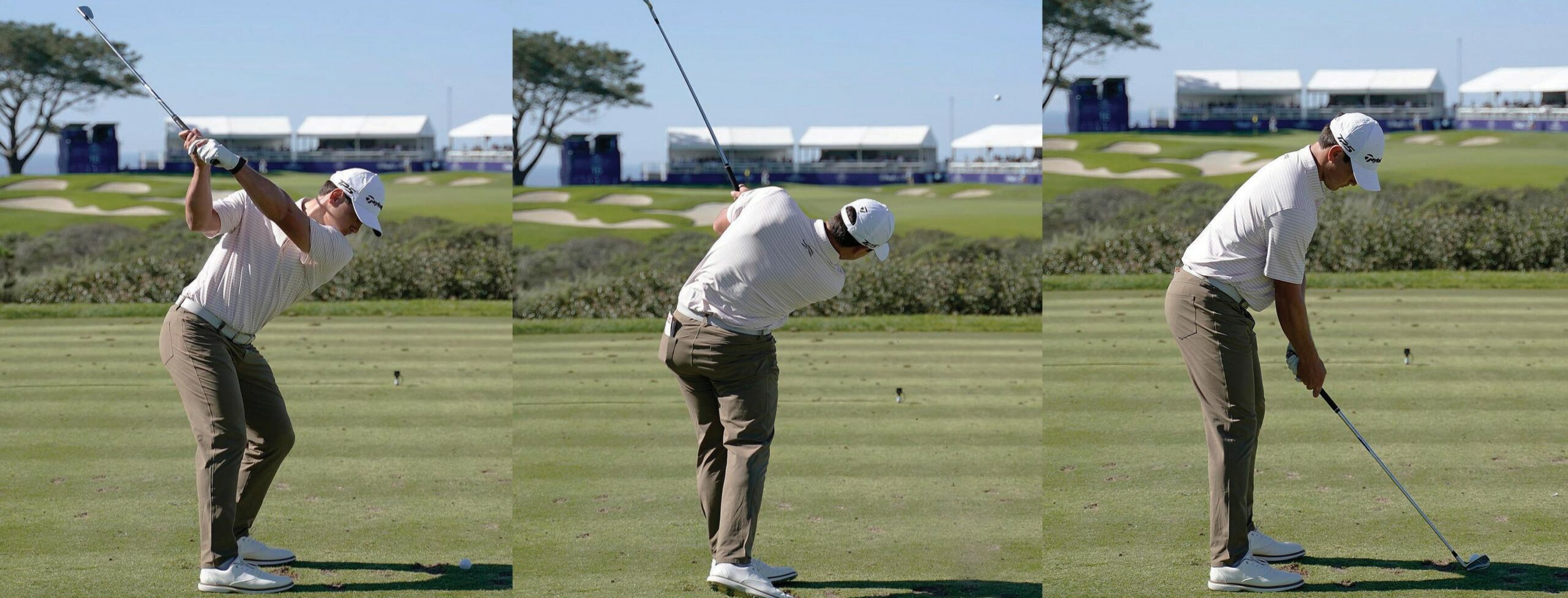
After breaking down his swing, it’s easy to see why he’s quickly becoming a rising star on the PGA Tour.
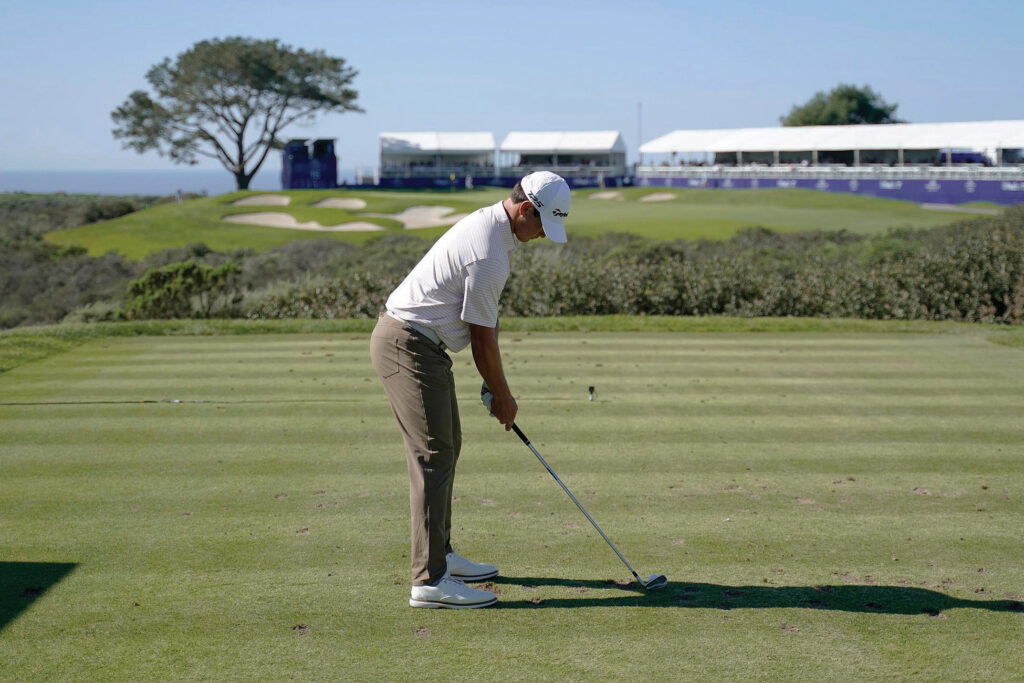
1. Balance Starts at Setup
Karl’s knees, hips, and shoulders are square and aligned parallel to his intended target line.
His hips are positioned to create balance through the middle of his feet — not on his heels and not on his toes. His posture allows the arms to hang naturally beneath the shoulders with ample space from the body.
That freedom and structure at address promote consistency and improved face control at impact.
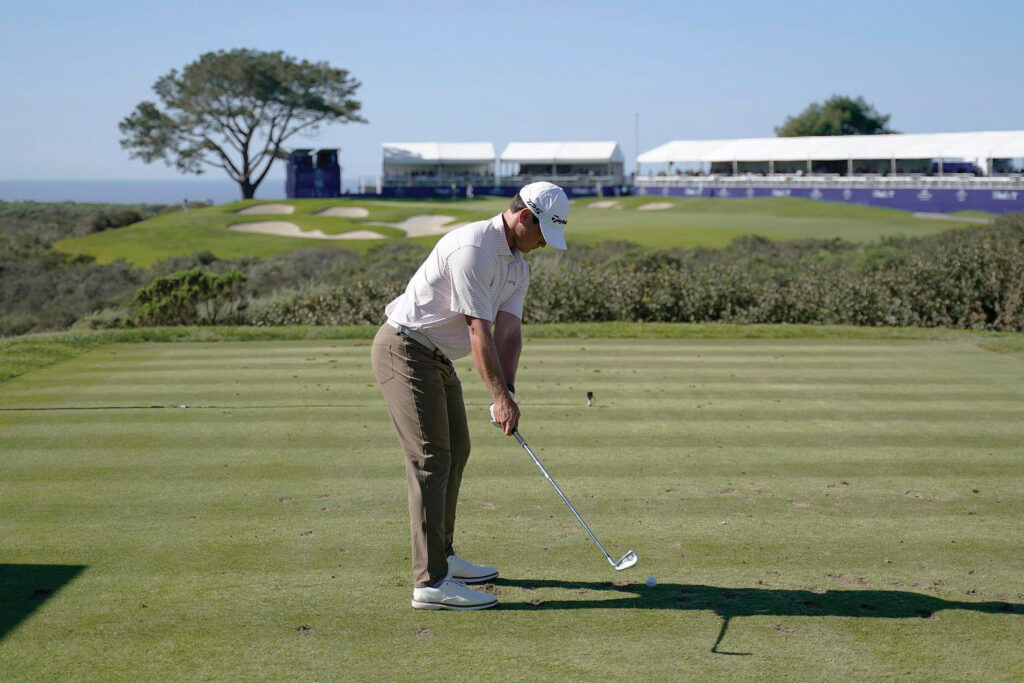
2. Control the Takeaway, Control the Swing
The first foot of the takeaway sets the foundation for everything that follows.
It should be driven by body motion — not hand manipulation. As the club moves away, pressure shifts into the trail side while the hips and shoulders rotate together. The arms respond to the turn; they do not initiate it.
When the hands become active too early, face control and sequencing begin to break down.
Build the swing from the ground up, and the rest can unfold naturally.
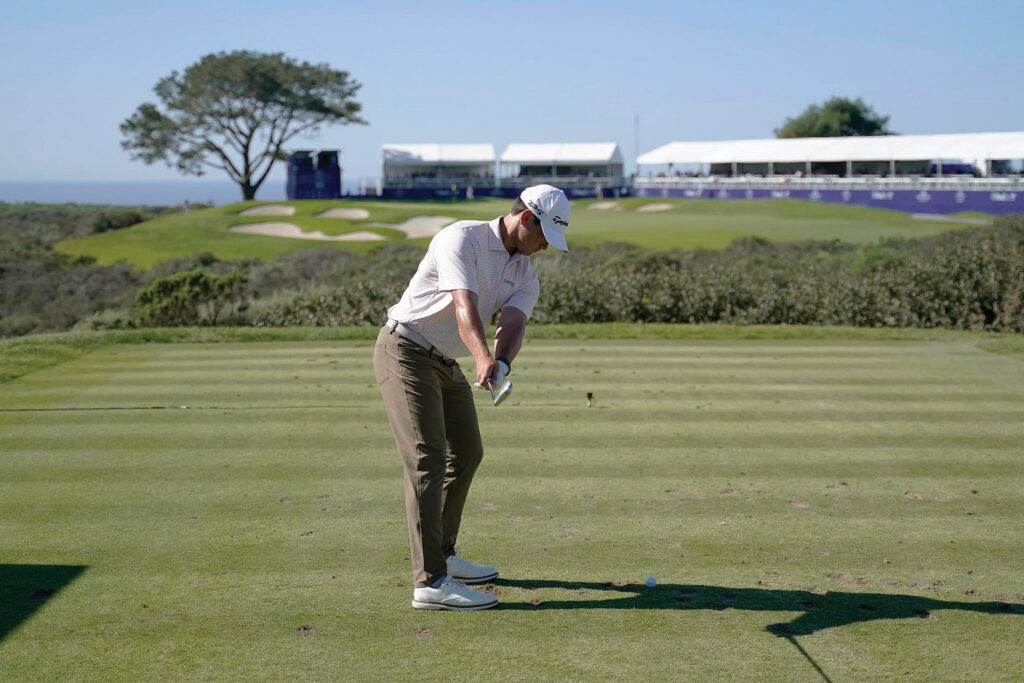
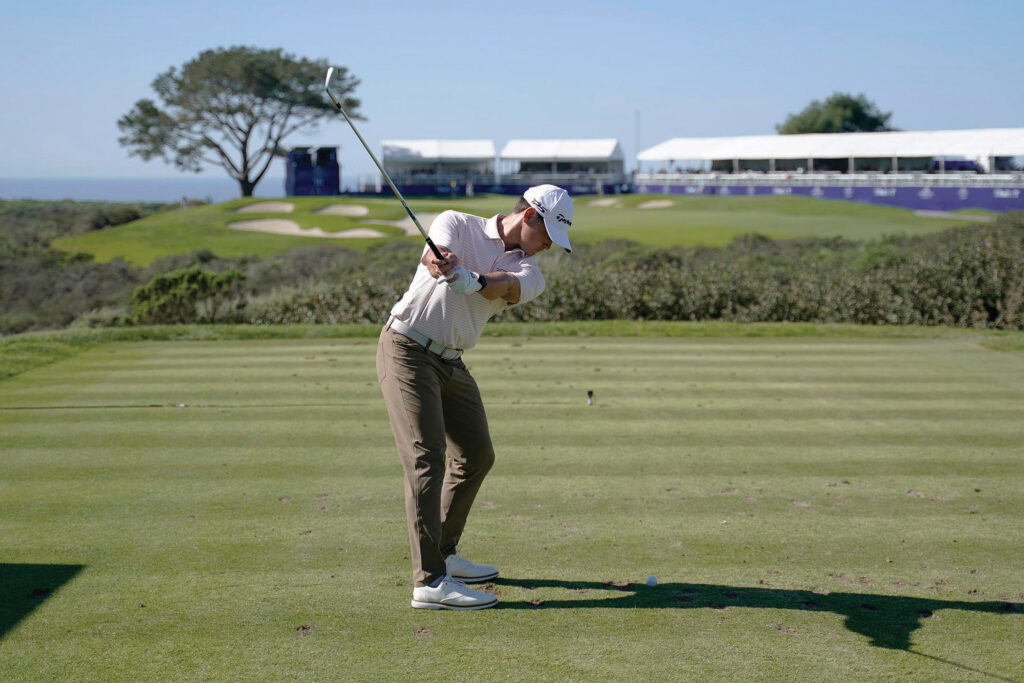
3. Checkpoint: Halfway Back
At the halfway point of the takeaway, the arms remain relaxed and comfortably away from the body. There is no manipulation of the hands, allowing the club face to stay aligned with his spine tilt.
The club travels naturally through his hands and remains parallel to the target line. Because the motion has been driven by the body rather than the hands, everything stays in sync.
It’s a simple position — and very close to perfect.
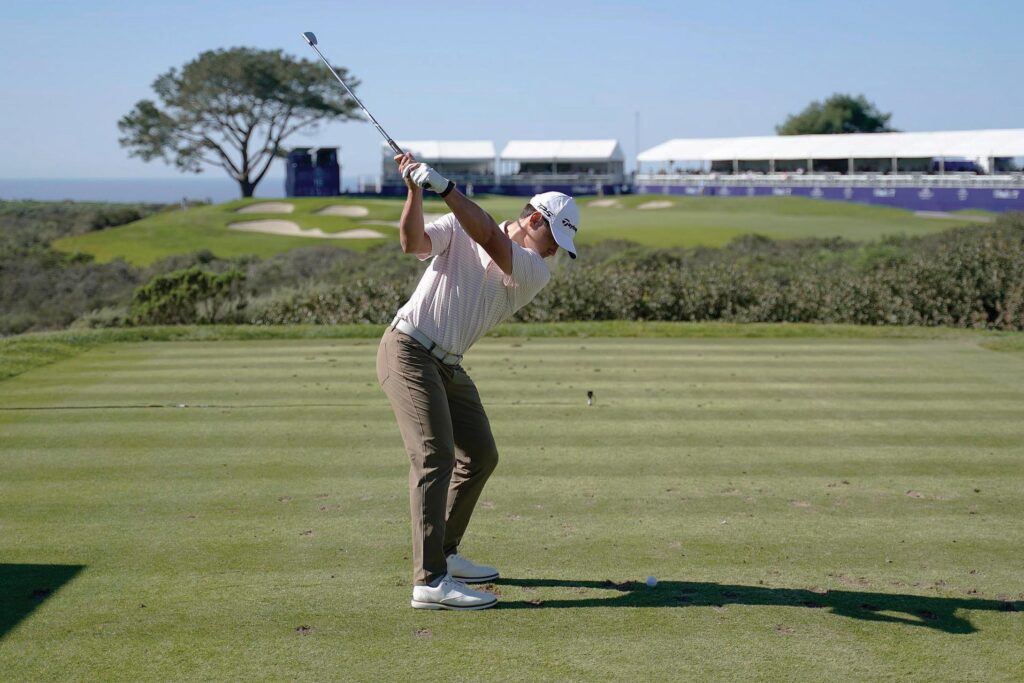
4. Three-Quarter Position
At three-quarters of the way back, the hips and chest continue to load into the trail side while maintaining balance through the middle of the feet.
The hands remain in front of the chest, a key indicator that the swing stays connected and structured. The shaft points toward the ball, placing the club on an excellent plane.
With balance, depth, and structure intact, the swing is built to deliver from a powerful and repeatable position.
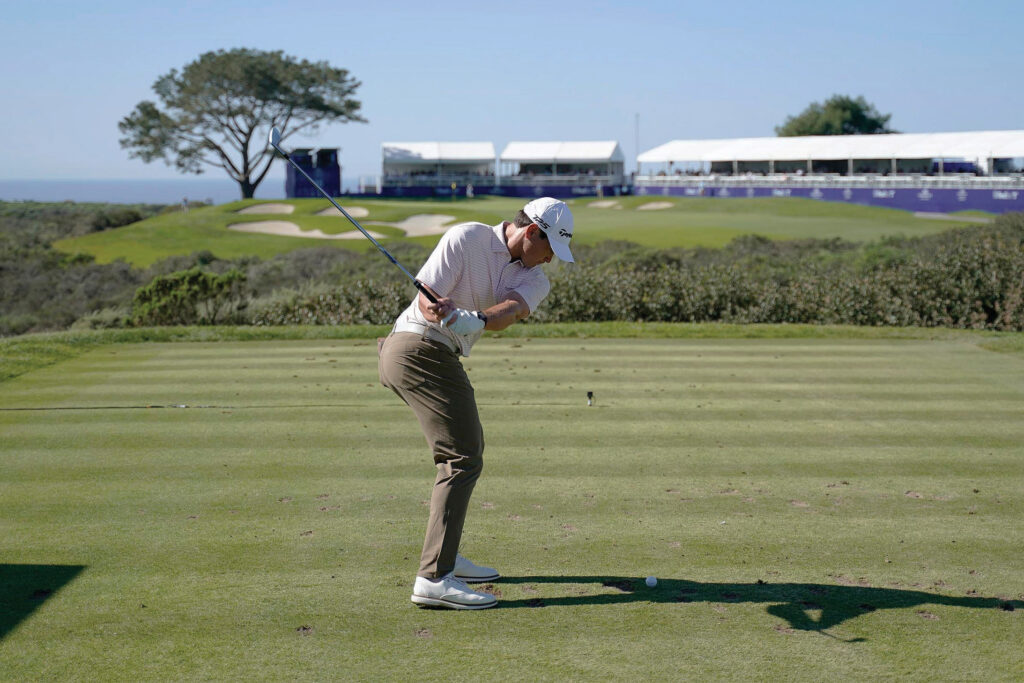
5. Top of the Backswing
At the top, his trail leg is athletic and fully loaded, with balance centered through the middle of his feet.
The club stops just short of parallel — a sign of efficient fundamentals and no wasted motion. Because the weight shift and rotation are properly sequenced, there is no need to overswing to create power.
His right elbow points down, supporting the structure, while the shaft remains on plane and aligned toward the ball.
A compact, efficient position built on balance and control.
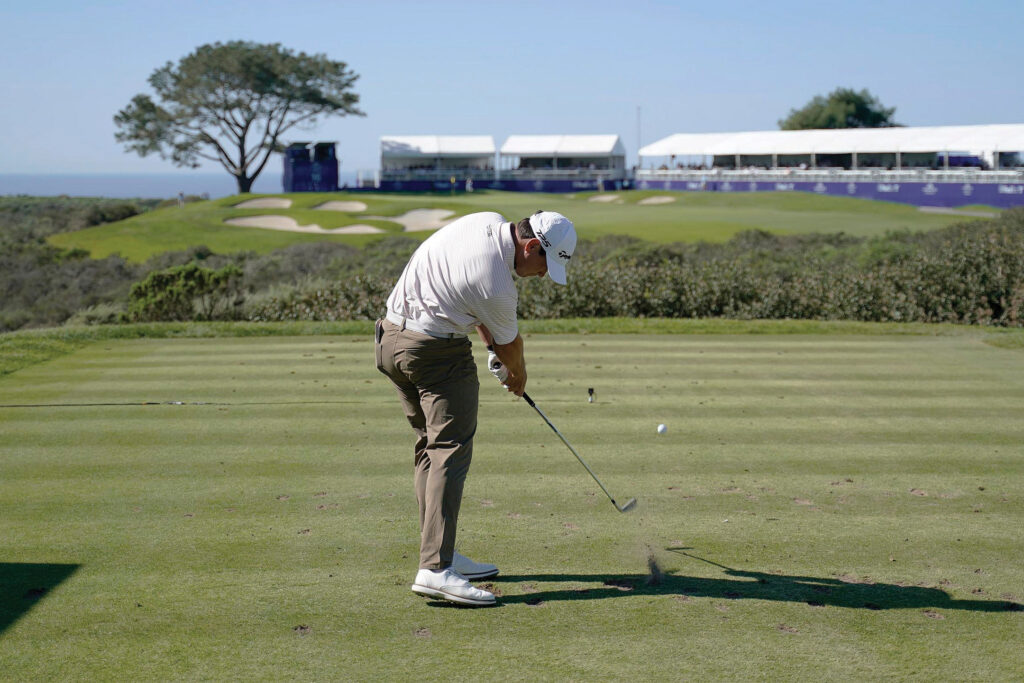
6. Downswing
In transition, he shifts the weight from his trail foot onto his lead leg while keeping his chest closed to the target. This move allows the hands and club to drop naturally into an excellent position to approach the ball from the inside.
The shaft continues to point toward the ball, maintaining a strong, on-plane delivery.
It’s a powerful move built on sequence and control.
7. Follow-Through
Maintaining posture and balance well past impact reduces the tendency to pull or push shots.
When the swing is properly sequenced, the weight of the club and the centrifugal force of the motion naturally carry the body into a tall, balanced finish.
A controlled follow-through is the final confirmation of a fundamentally sound golf swing.
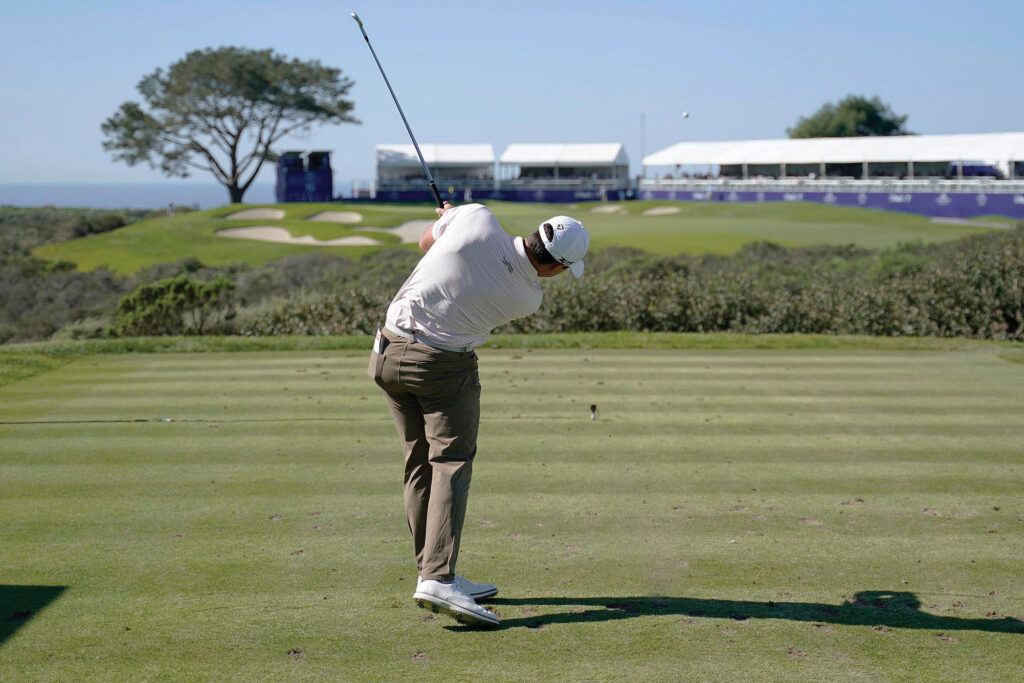
8. Through Impact
He demonstrates excellent balance as his weight shifts almost entirely from the trail foot onto the lead leg.
By maintaining posture and stability through the hitting area, the hands and club extend naturally toward the target rather than working across the body.
It’s a centered, powerful position that delivers both control and consistency.
Eric Woods
Golf Lab Academy Founder
2 Time Canadian Tour Leading Money Winner
Canadian Tour Low Stroke Average Winner
South American Leading Money Winner
Tour Member:
Asian Tour, Australian Tour, Canadian Tour, South African Tour, South American Tour

